Pyramid of the Sun, Mexico
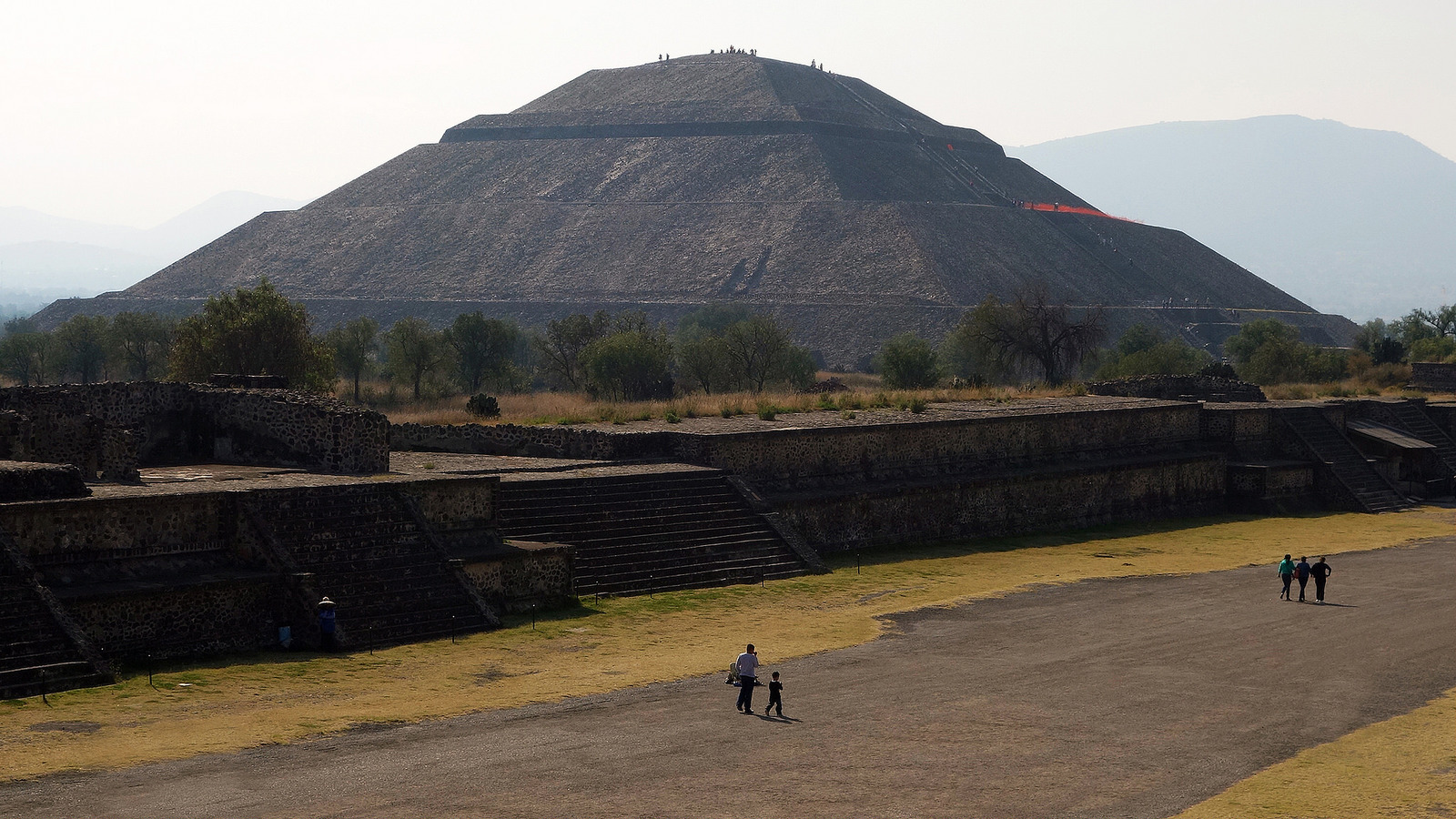 |
| Pyramid of the Sun and the Avenue of the Dead, Teotihuacan, Mexico |
Teotihuacan is a city apart of ancient Mesoamerica that is located in near modern day Mexico City. The Aztecs found the city sometime in the 1400s and named it "Teotihuacan" which has the meaning: where the gods were created. Although the origins, history, and culture of Teotihuacan remains mostly a mystery and has been abandoned for centuries, the art and architecture styles were found widely throughout Mesoamerica, suggesting the city had an extensive influence.
The largest structure in Teotihuacan is this one, the Pyramid of the Sun. The second largest is called the Pyramid of the Moon. We don't know who built this ancient city but some scholars had once believed that the ancient civilization, Toltec, may have been responsible for the build of the massive city. Others believe that a true from the east, the Totonacs built it. Another theory is that immigrants swarmed into the valley after a volcanic eruption and they were the ones that founded the city. It appears to incorporate features of multiple cultures which include the Maya, Mixtec, and Zapotec and is thought to have had a population as large as 200,000. Whichever theory is true, Teotihuacan was established as early as 400 B.C.E. and wasn't finished until around 300 C.E.
Artifacts that were found in the city suggest that it was a wealthy trade capital of a region. It was discovered that the city had exported obsidian tools like spears or dart heads and ceramics such as pottery or other arrangements of luxury items were highly prized because of their intricate detailing. Likely, other goods included cotton, cacao, shells and exotic feathers. Some of the harvests involved beans, avocados, peppers, squash, and farms even raised poultry.
The reason why Teotihuacan collapsed is unclear. Major buildings were purposely burned, art, and religious sculptures were demolished around the time 600 C.E. The cause of this may have been because an uprising sprang up between the poor and the ruling elite. Another theory suggests that invaders of the city burned it. Teotihuacan had military power, but the city lacked fortifications and important military structures. By the time 750 C.E., the lingering occupants of the city had all abandoned their homes to join nearby cultures or return to their ancestral homes.
References
Dr. Maya Jiménez, "Teotihuacan," in Smarthistory, December 17, 2015, accessed November 22, 2020, https://smarthistory.org/teotihuacan-2/.
History.com Editors. (2018, January 05). Teotihuacan. Retrieved November 23, 2020, from https://www.history.com/topics/ancient-americas/teotihuacan


This is a pretty cool structure! I'm interested in why a lot of the major buildings happened to get purposely burned. The theory suggesting that invaders might have been behind the cause sounds like an applicable answer. Nice informative post!
ReplyDelete